Bonus: Wild Guesses About the Future
This one is called "Wild Guesses About the Future." Since it's wild guessing, I won't take any challenge to it, and I take no responsibility for a single line in it — it's purely a tech person's flight of fancy, just tossing out a few ideas.
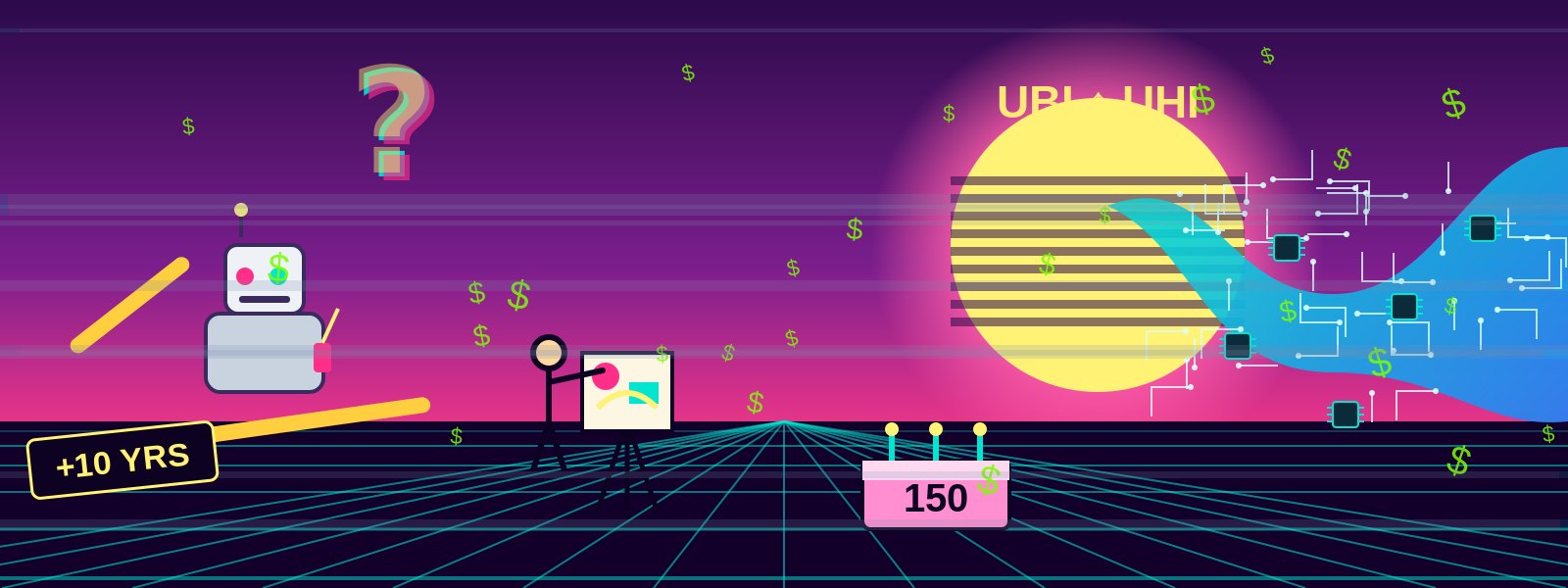
The predictions I'm about to make will probably sound like a horror movie. But they aren't something I dreamed up out of nowhere — they're the kind of anticipation that gets triggered when AI actually touches our core values. My guess is that whether you're Elon Musk, or someone like me who has "already been replaced by AI," you'd feel something similar. This isn't a question of "right or wrong" or "good or bad" anymore — Pandora's box is already open, and it's an irreversible trend.
Honestly, I worried about this future for quite a while. Earlier this year, once I started working closely with AI, there was a stretch where I couldn't sleep, because I couldn't come up with a plausible scenario in which humans still get to live well. Later, I slowly made peace with it — and with myself.
But the real point is this: since it's irreversible, how should we respond? The reason I'm writing it down is that if even those of us standing at the very front of technology, in contact with the world's newest knowledge every day, don't yet have this awareness, then what comes next could well be a "bloody" transition: mass anti-AI riots, even conflict sparked by them; or, the other way around, being pushed around by AI, and by the capital behind AI. I just hope more people can get ready, and adjust their mindset, as early as possible.
I don't dare imagine how big the upheaval of the next ten years will be. Maybe the human population drops by half, or even a third — these are terrifying thoughts. How do we avoid it? Honestly, I don't know. I can picture roughly what ten years from now looks like, but that transition in the middle is genuinely hard to imagine.
It reminds me of the 2000 dot-com bubble. Back then people had all kinds of imaginings and all kinds of resistance about the future, but almost no one could foresee today, twenty years on: that each of us would carry a tiny, connected supercomputer, and do almost everything in life on it — booking tickets, hailing cars, shopping, entertainment. If someone back then had described the present like this, they'd have been called crazy. It's just that the timeline is compressed now — the things that will happen ten years from now sound, right now, exactly like crazy talk.
Is any of this good or bad? It's not really a good-or-bad question. If I really had to choose, I'd honestly miss the world of my childhood, the one without the internet — that solid, physical life: horse-fighting games, marbles, pogs; baseball out in the fields, catching tadpoles, raising silkworms. That kind of "real life" is drifting further and further away. I'm a tech person, but I've never believed every step of technology is progress — from paper books to e-books, from vinyl to CD to streaming, that purest feel and warmth really has slowly disappeared.
That said, this wave doesn't only have a dark side.
I actually believe the productivity that comes next will be an explosion — and vibe-ic, by "democratizing" IC design, is precisely accelerating it. When the barrier to designing a chip is lowered, more people can get their hands on it, and things get built faster.
And IC design will no longer be only about chasing advanced process nodes. The other road is making the volume on mature nodes enormous. My guess is that a situation will emerge: demand for mature-node ICs will grow explosively, and be highly customized — every scenario wanting a chip that fits it just right — which in turn accelerates the whole of production. When volume gets very large, cost gets pushed very low; and of course, margins get very low too. As for which industries this hits hard, and whether it's bullish or bearish — I'll leave that to the capital-market experts to analyze; I make no call on it.
Finally, one thought to leave you with: the democratization of IC design is really just the next step after the democratization of software. So what's the step after that? The democratization of the construction industry? Or some other industry? That, I'll leave for you to think about.
Let me guess a little further out. If this "democratization" keeps going all the way, the picture ten years from now might look like this: nobody has to work anymore. There'll be some form of basic income — UBI (Universal Basic Income), maybe even UHI (Universal High Income). And prices? Once AI takes over almost every task humans are forced to do, the cost of making things drops so low that a lot of them become nearly worthless. People get liberated from working just to stay alive.
Maybe UBI and UHI still sound too avant-garde to you, or it's hard to picture prices and goods really dropping to almost nothing. But it isn't that hard to imagine — you can reason it out from two things we can already see today.
One is a precedent in how resources get distributed. Look at the oil-producing states: in many of them, whatever the people want to do, the state provides; you don't have to work just to stay alive. That scene already exists.
The other is how far production cost can be pushed. Take mainland China today — production costs are already unimaginably low. Go look at Pinduoduo: the prices are so low you can barely understand how anyone still makes money. It's already this deep into “involution” now, and it'll only get more so; when the whole world races to the bottom together, cost really does get pushed very, very low.
These are all things you can observe right now. So what I'm describing isn't really that hard to imagine after all.
But then what? Once we're liberated, what do people do? Pursue their own interests, learn new things, chase the work that gives them a sense of achievement, embrace art — those are all directions. But it forces each of us to seriously sit with a question we mostly didn't have to before: when you no longer live for work, what are you actually alive to do? Especially once advanced medicine becomes so widespread that everyone might live to 150 — with a lifespan that long, and no need to live for work, what is it that you truly want to pursue?